
A Platform for Fairer Gigs and Simpler Payments
Gigs come through personal connections, payments arrive late or not at all, and managing bookings means juggling Instagram, WhatsApp, phone calls, and spreadsheets at once.
This project started with one question: what would a platform built specifically for DJs actually need to do? I approached it the way I approach any design problem — by listening first.
Before touching any UI, I conducted eight one-on-one interviews with working DJs — hobbyists to full-time professionals. Sessions were recorded and transcribed using Otter.ai, then synthesised into themes across five areas.

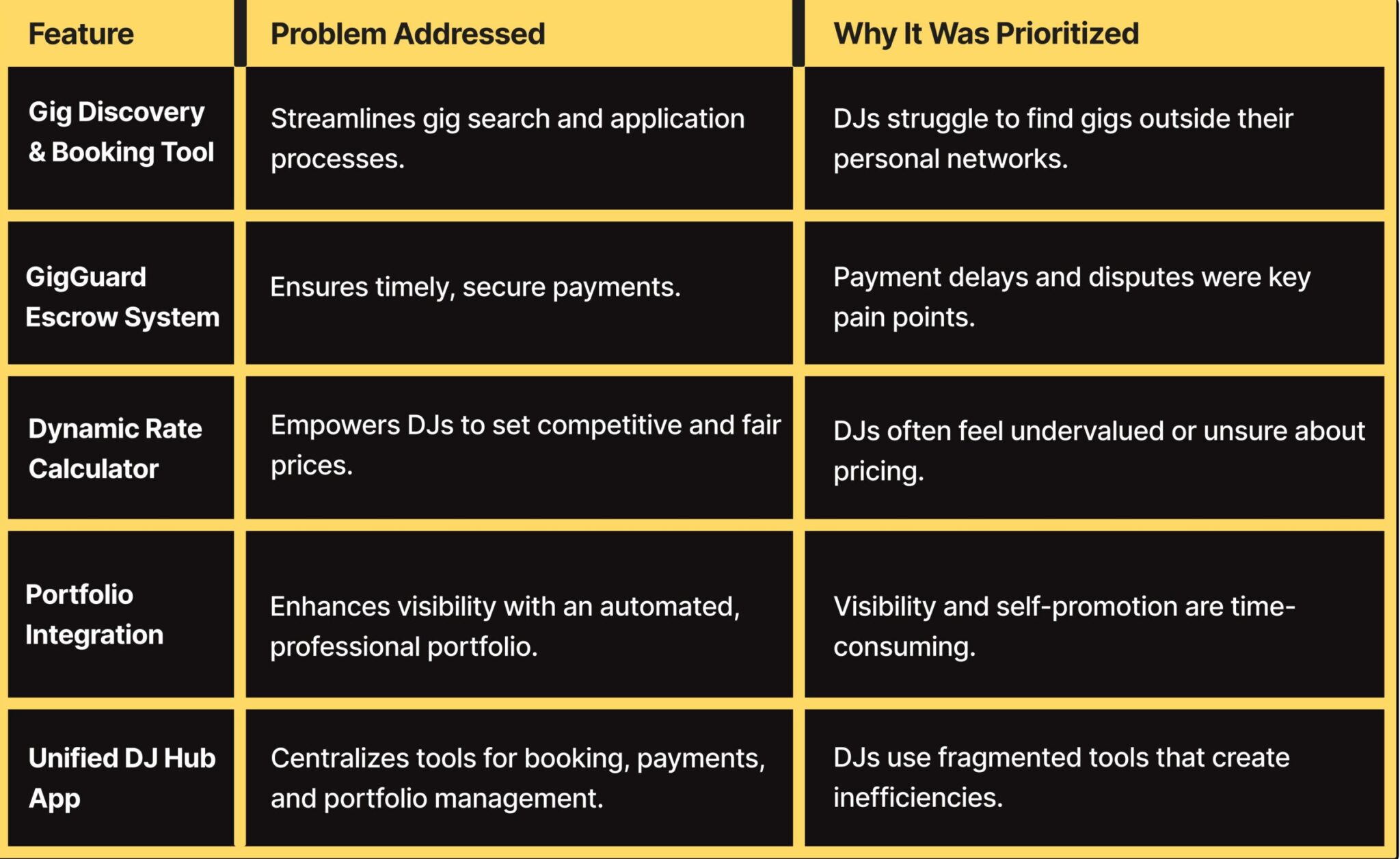
I used a feature prioritisation framework to decide what to build first for the MVP. The research made the decisions easy to defend.
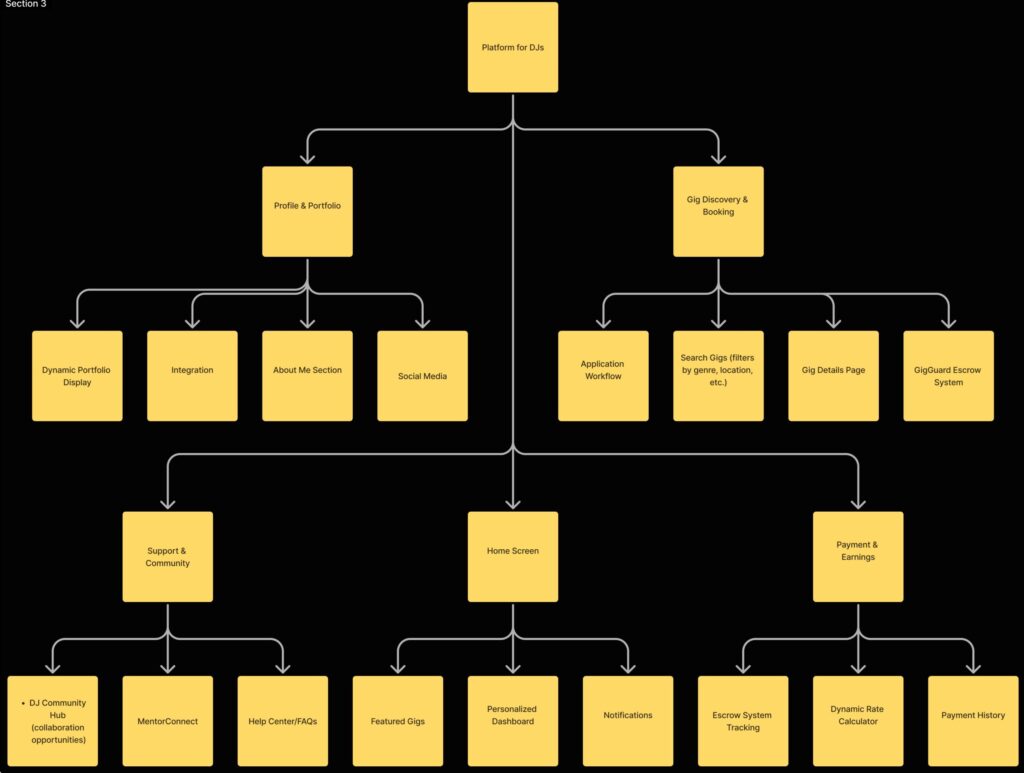
I structured the platform around five areas, each addressing a distinct part of the DJ workflow. The goal was to replace the fragmented tool-switching DJs described in every interview.
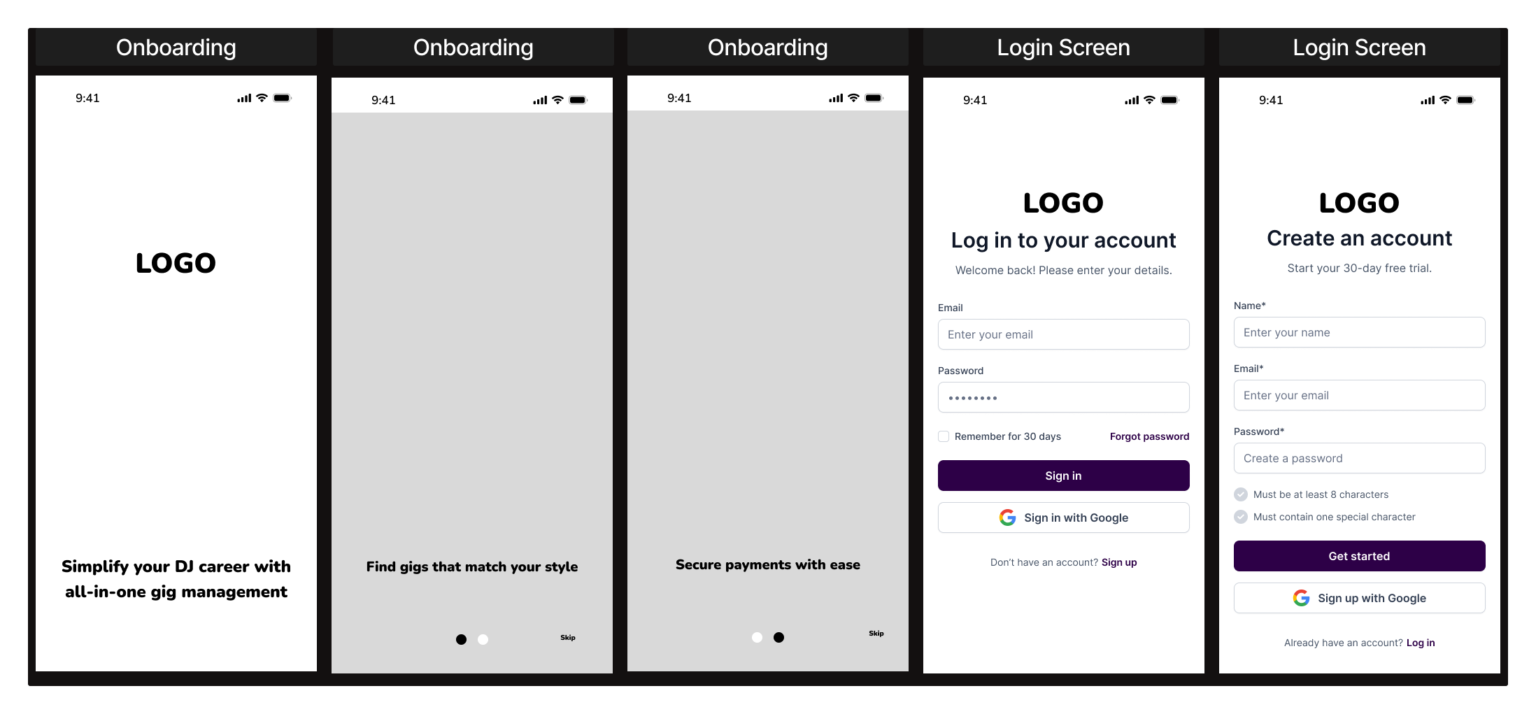
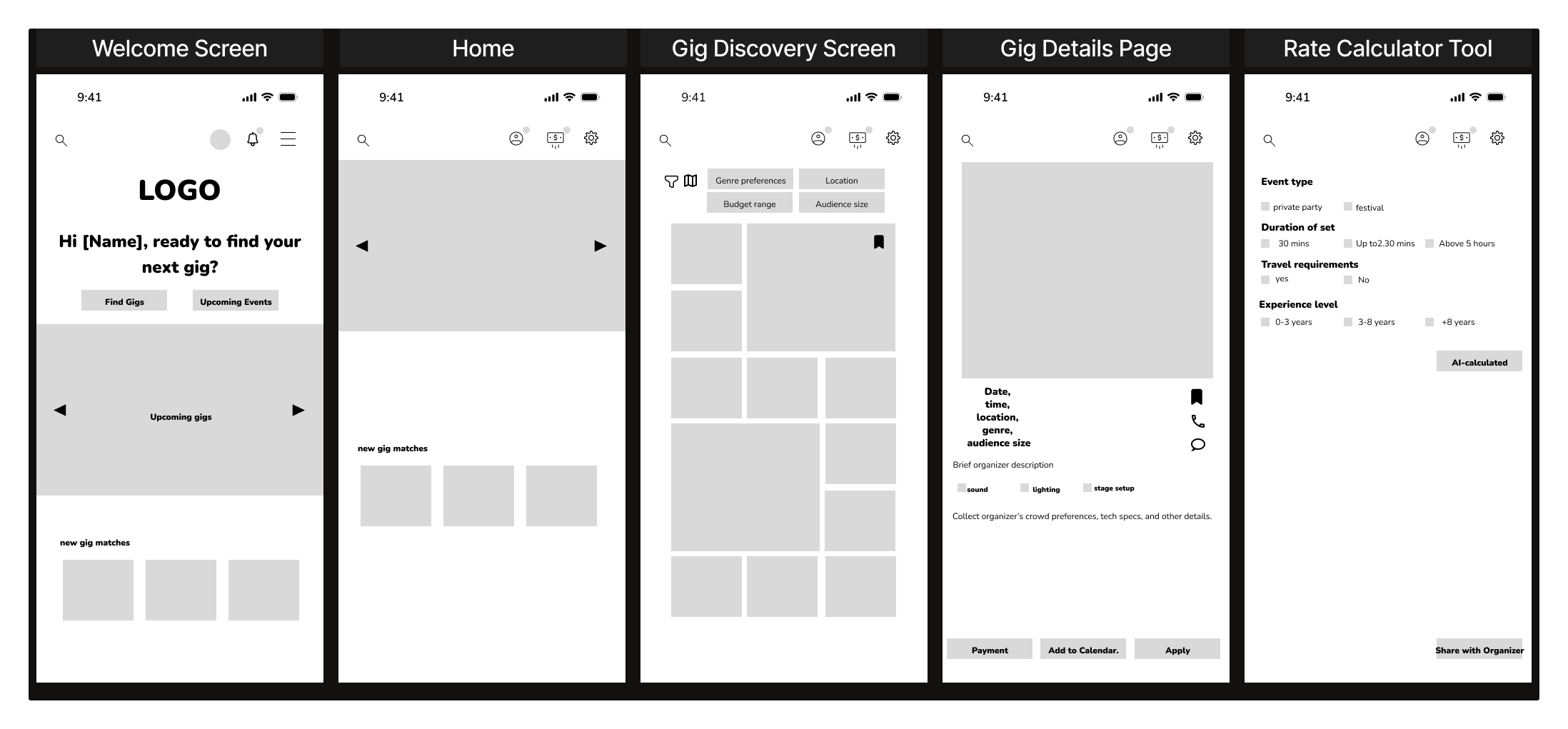
I started with lo-fi wireframes covering the core flows — onboarding, gig discovery, gig details, and the rate calculator. Filter complexity was reduced early based on what DJs said: they want to scan fast and act fast, not wade through options.
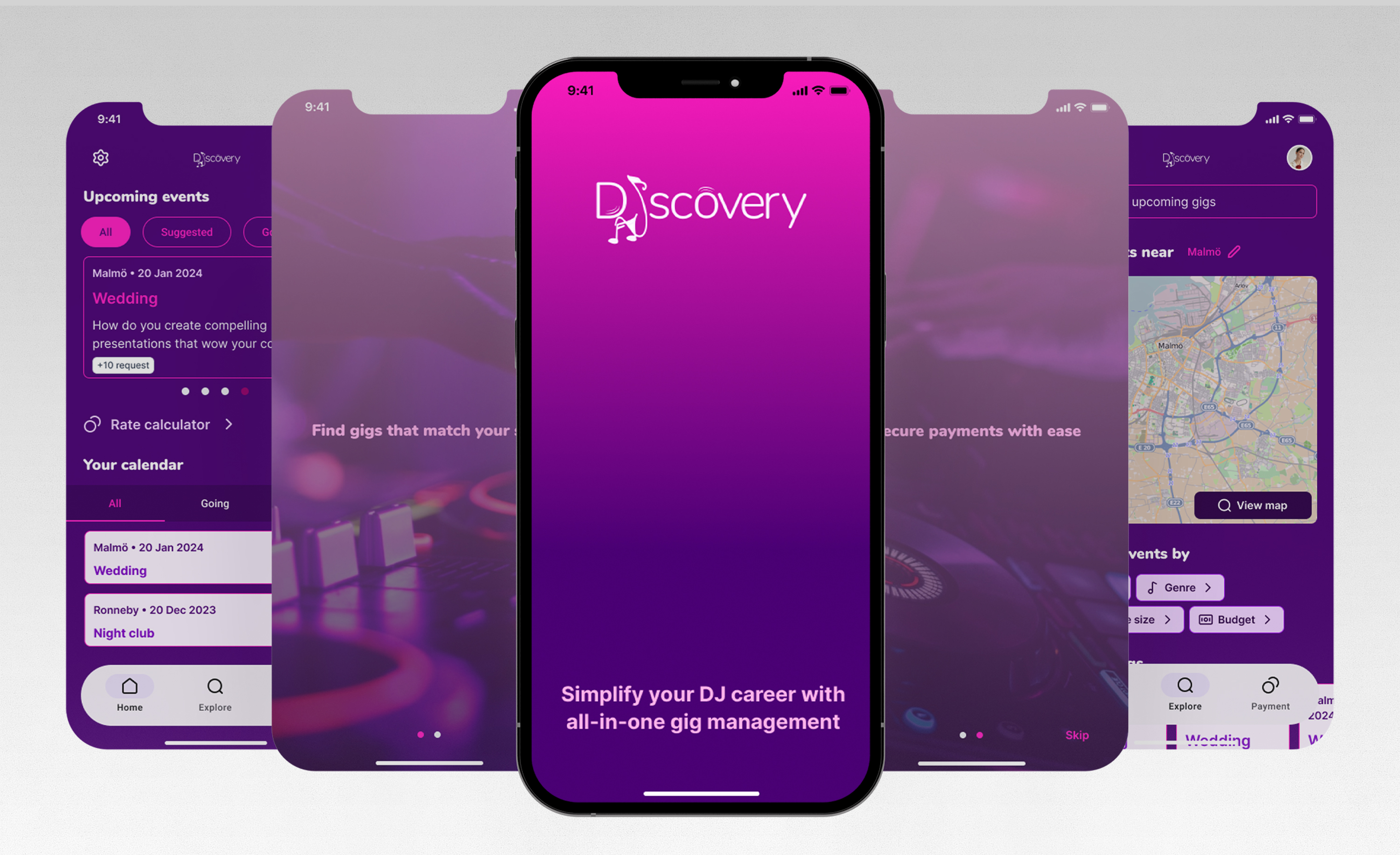
Once the structure was validated, I moved into hi-fi design in Figma. The visual direction — dark, bold, purple — was intentional. It needed to feel native to the culture DJs operate in, not like a generic SaaS tool.
The Discovery app brought together gig browsing, filtering by genre and location, and a rate calculator — all the things DJs said they were missing in one place.
This project went further than a design handoff. Working with the startup team, I used Lovable to build a functional MVP of the home screen — a working prototype, not just a mockup.
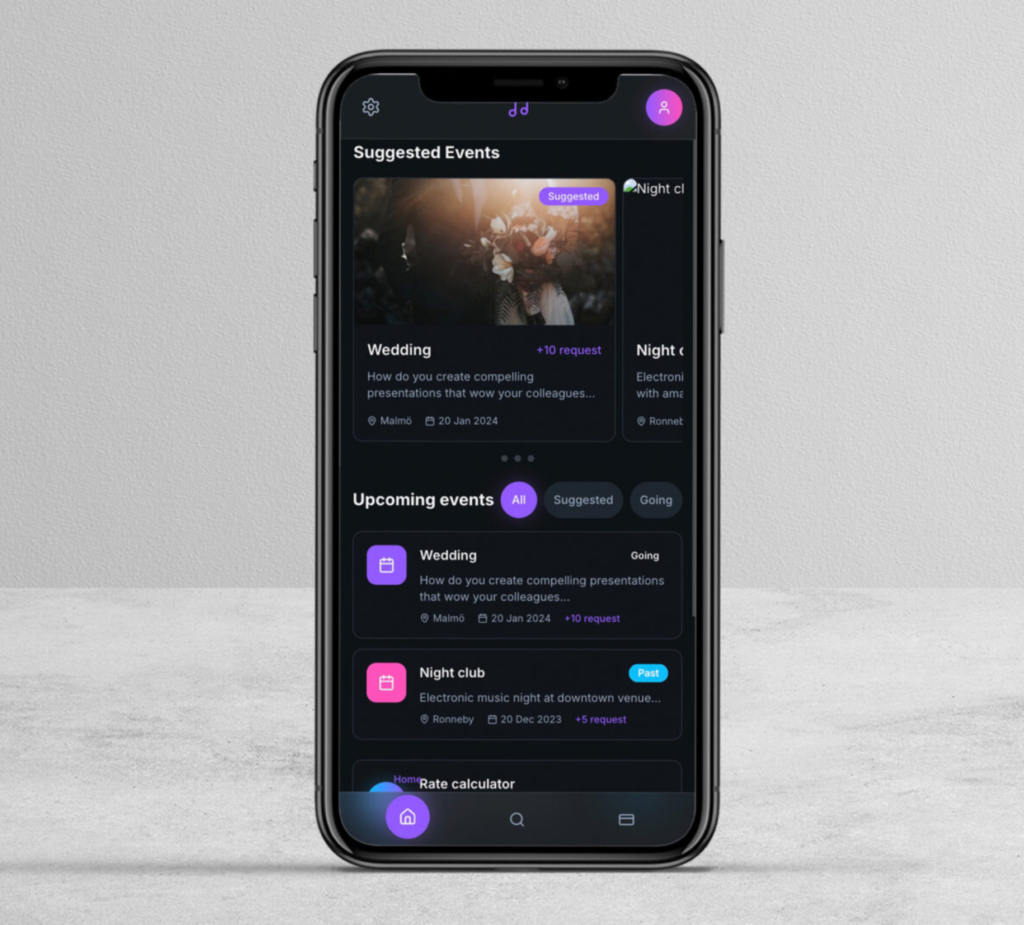
The home screen shows suggested events, upcoming gigs with Going and Past status labels, and a rate calculator — the three things DJs said they needed to see at a glance. Every structural decision in the build came directly from the research.
The MVP demonstrated the core DJ experience end to end: discovering gigs, applying, tracking status, and managing payments in one place. The escrow system came from DJs describing payment disputes. The application tracker came from DJs saying they never knew what happened after they applied. The research made every design decision easy to defend.
Designing for an industry I knew nothing about taught me that deep listening is the most important design skill. Eight conversations later I understood the DJ world well enough to make structural decisions with confidence.
This project also pushed me past my comfort zone as a designer — using Lovable to build a working prototype rather than just handing off a Figma file. That shift changed how I think about the design-to-build boundary.
This was an early-stage startup collaboration. The platform is in active development. This case study reflects the research, structural thinking, hi-fi design, and MVP prototype from the initial six-week phase.