Back to portfolio
UX & UI Design · Puls Health · 2024–2025

Dashboard Redesign

To bring clarity, hierarchy, and calm to a fast-growing research tool.

Role
UX/UI Design & Documentation
Team
Solo designer, PM, Developer
Duration
Nov 2024 – May 2025
Tools
Figma, MUI, Lovable, Notion, Otter.ai

A tool that worked technically but couldn't be used effectively.

Puls Health Research is a digital platform connecting participants with clinical trials. The goal is to make research more inclusive, accessible, and user-friendly — especially for patients managing conditions like migraines, diabetes, or cancer.

When I joined, the dashboard existed but gave researchers no real overview. Users could not find what they needed or understand what to do first. My task was to bring structure and readability to a tool that was functional but impossible to scan, while adapting to a mid-project shift from MUI to Lovable.
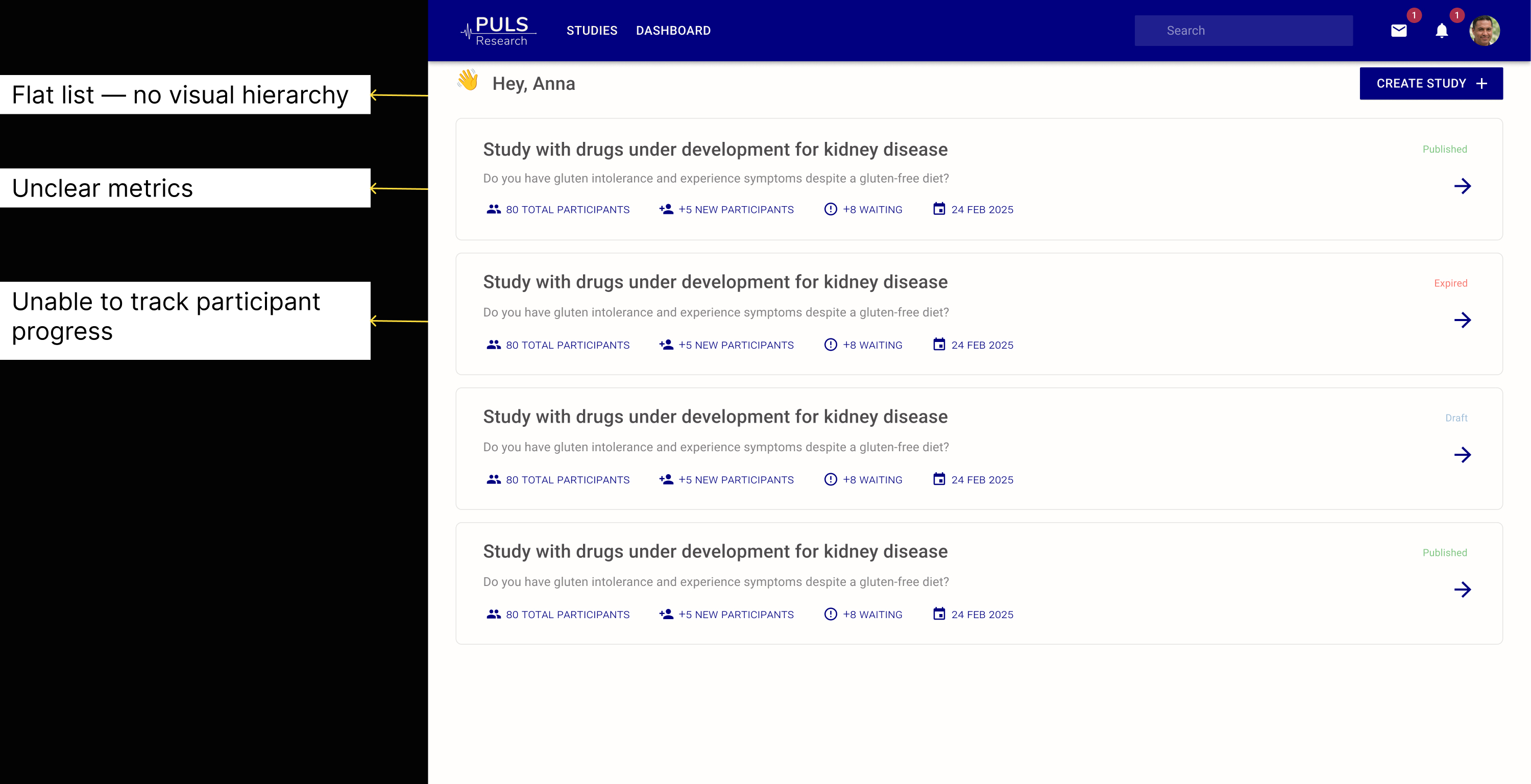
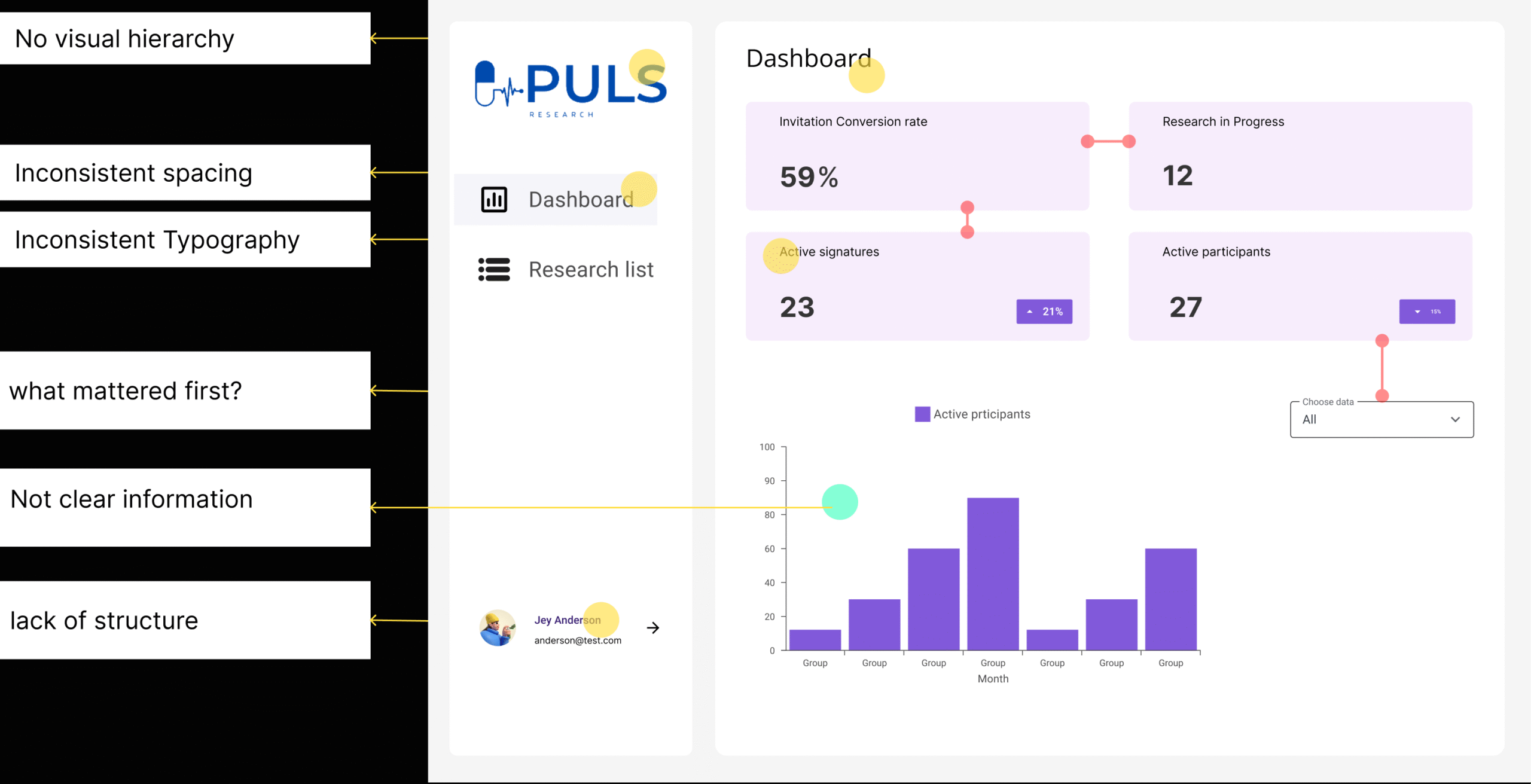
Original dashboard
Replace with: screenshot of original dashboard before redesign
Original dashboard. Dense, no hierarchy, and limited guidance for researchers.

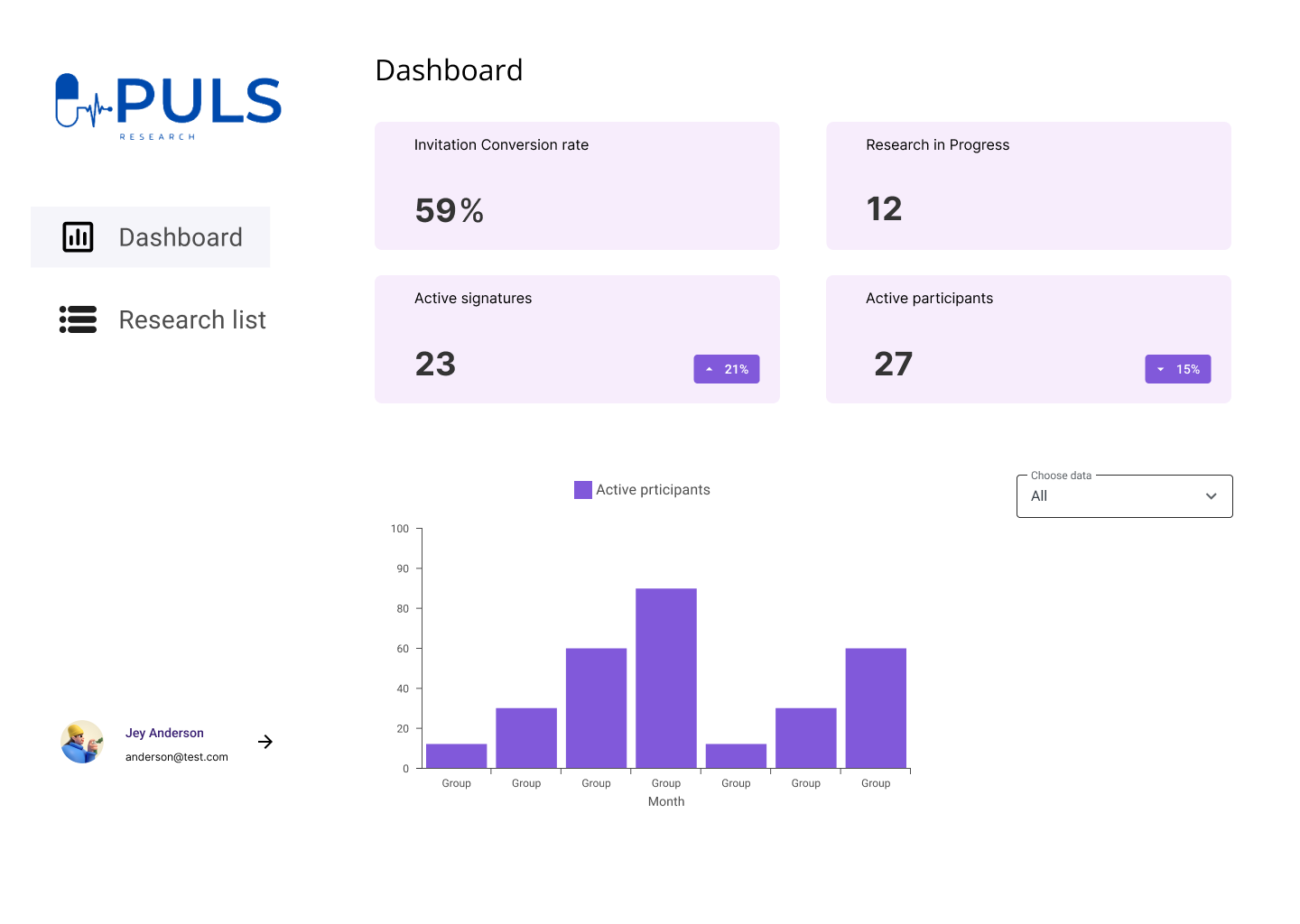
Six issues, one root cause: no visual hierarchy.

No visual hierarchy or guidance
Users couldn't see what mattered first
Inconsistent spacing and typography
Minimal information for real decision-making
Layout displayed data but didn't support user flow
Overall lack of structure and clarity
Audit annotations
Replace with: annotated audit screenshot highlighting issues
Early dashboard audit — annotated findings across hierarchy, spacing, and information density.

The developers' choice of MUI became my starting point. I focused on turning a minimal layout into a clear, structured dashboard. Each decision aimed to make information easy to scan and simple to build.
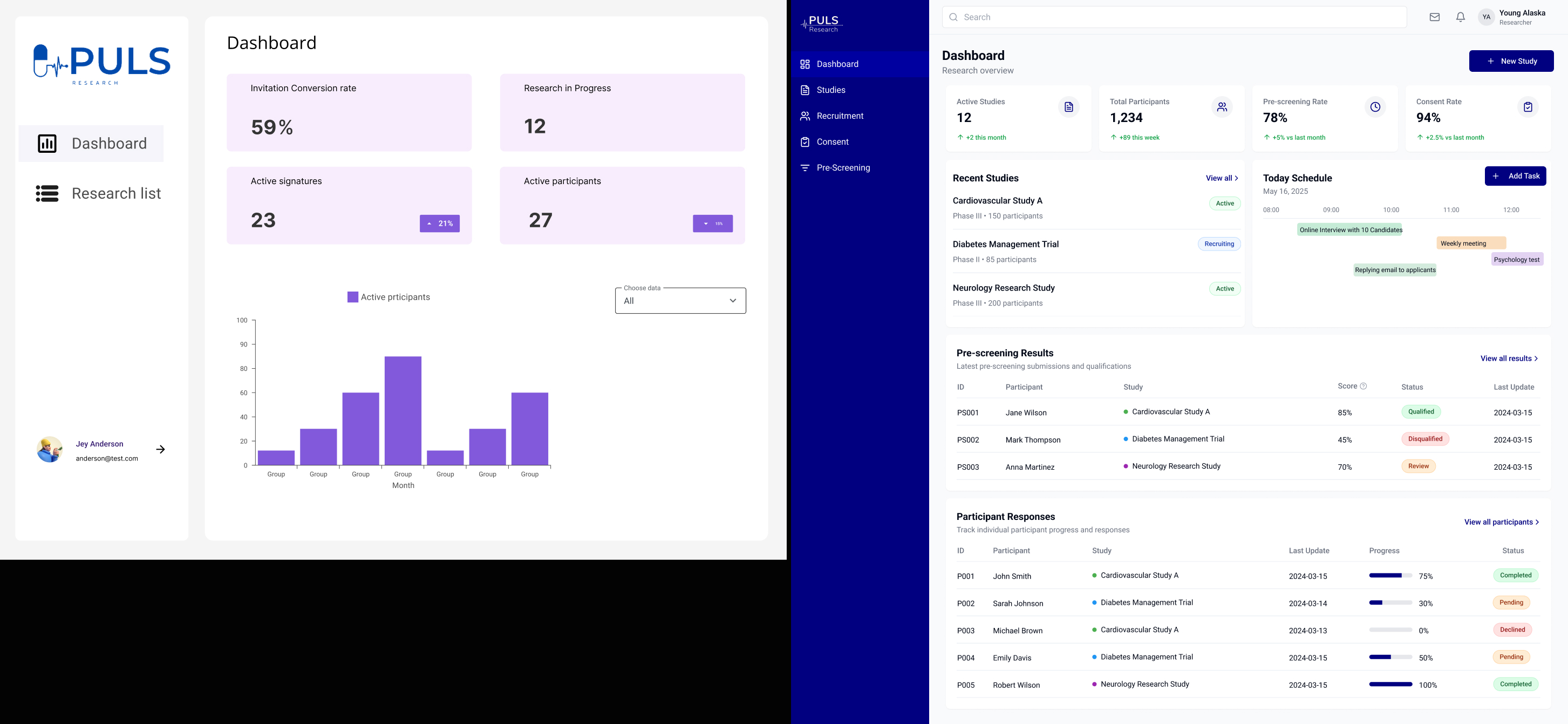
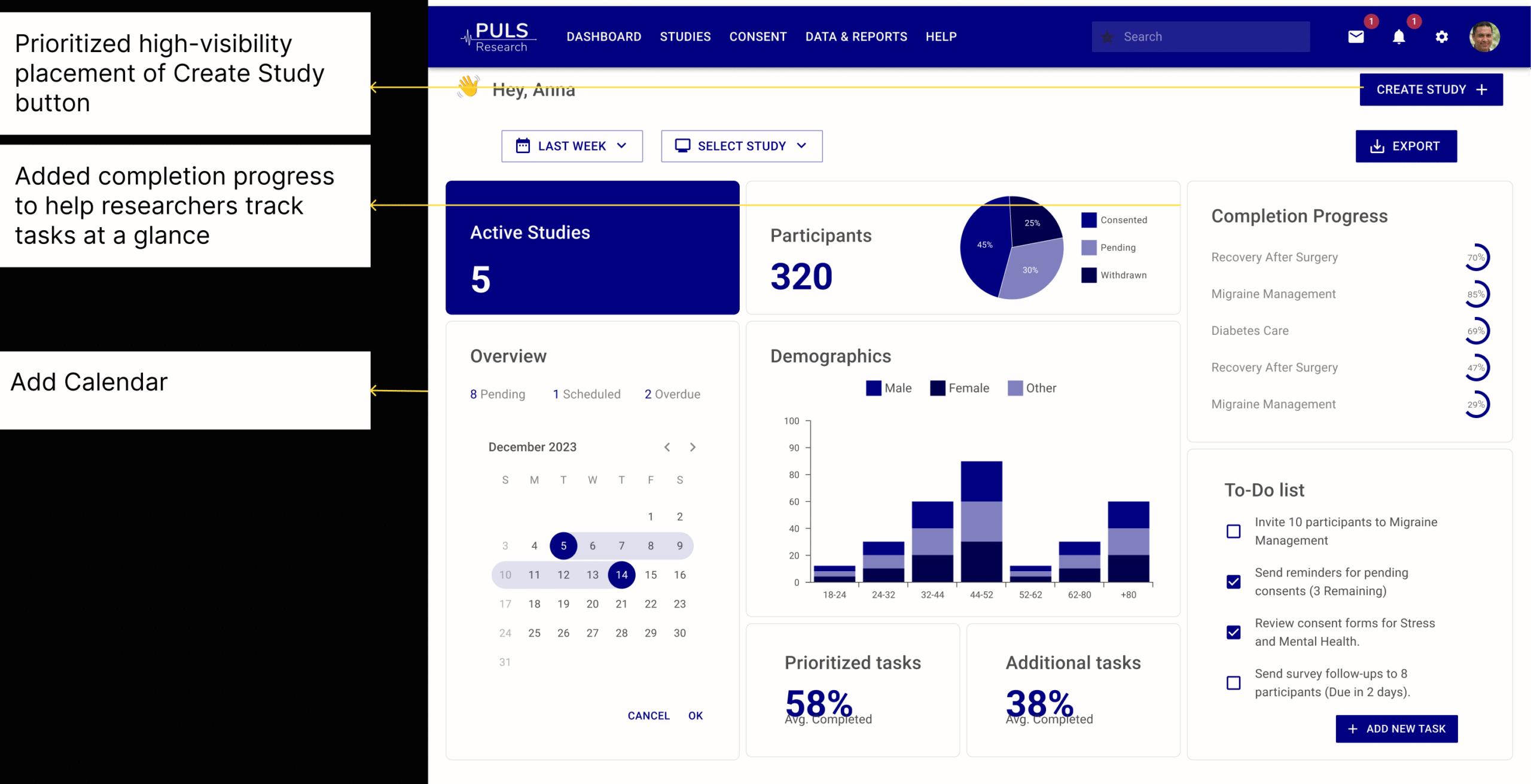
Three zones, one spacing system, one visual language.

Overview
Key study metrics — what's happening across all active trials at a glance.
Tasks
Daily actions — what the researcher needs to do today.
Insights
Visual trends — progress and patterns over time.
Design system
Consistent 8-pt spacing, colour roles, and component states across every module.
Before & After
Replace with: side-by-side before/after dashboard comparison
Before and after — restructured into three clear zones with consistent spacing and hierarchy.

When Lovable replaced MUI mid-project, I mapped design tokens and colours across both systems to maintain consistency. The visual language stayed stable even as the framework changed.
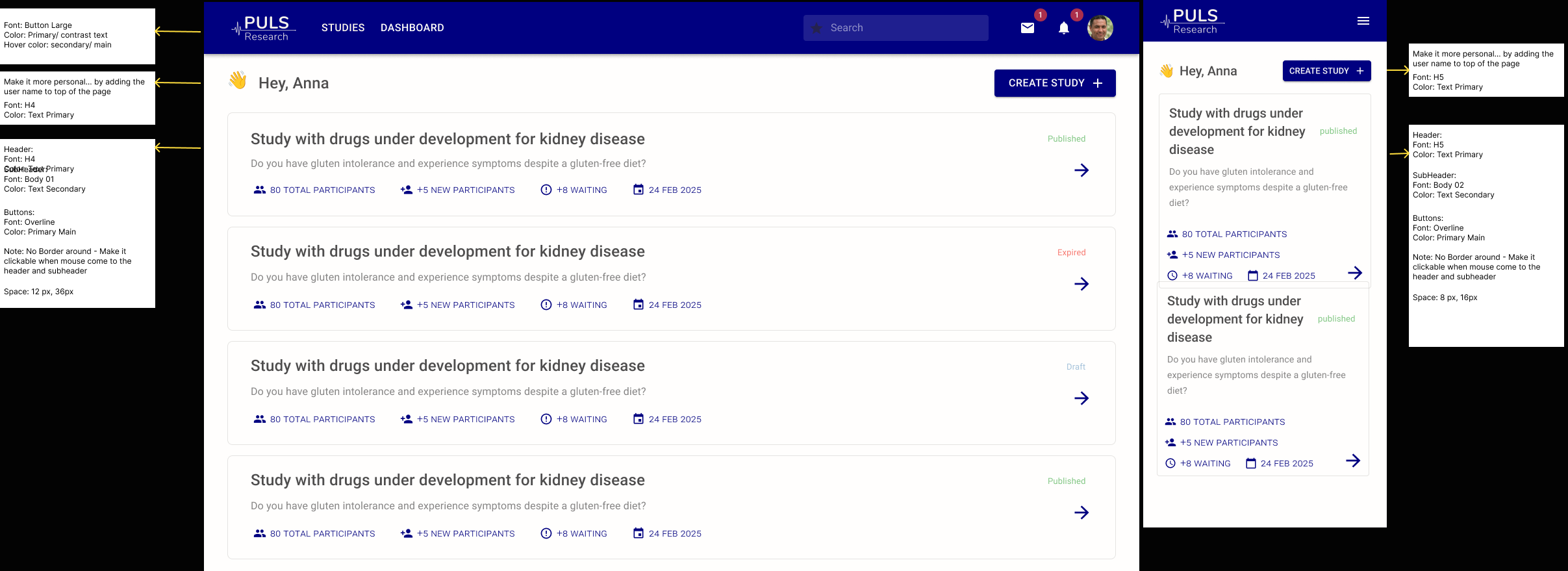
Annotated handoff
Replace with: Figma handoff documentation screenshot
Annotated handoff — spacing, colour roles, and component states documented for the developer.

Two versions, five researchers, one clear preference.

I tested two dashboard versions with researchers using Lovable, running short task flows and collecting feedback through Google Meet and Otter.ai.

Can users find and use the "Create Study" action?
Is the Score label clear or confusing?
Can researchers scan study cards quickly?
Does the calendar layout support appointments?
Are filters easy to locate in the participant view?
Moved "Create Study" to the homepage for visibility
Added a "?" tooltip next to the Score label
Introduced coloured labels for card scannability
Replaced raw numbers with visual indicators
Merged filters into a unified sidebar

Version B, with stronger hierarchy and clearer action points, was preferred in 4 out of 5 sessions.
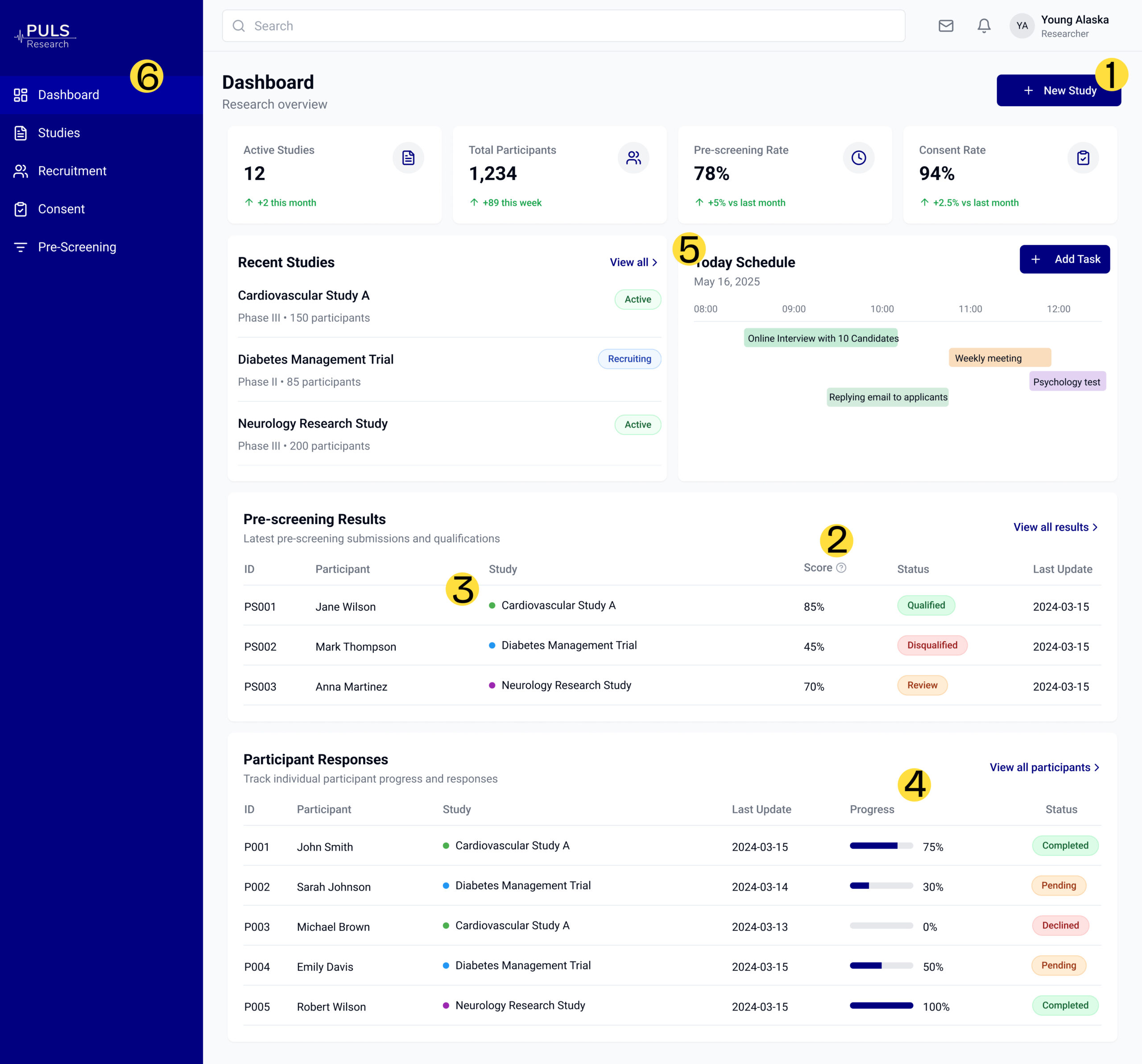
"Version B made it way easier to see who's eligible."
"I didn't even notice the Create Study button before — now it stands out."
"The calendar view feels more usable than the appointment list."
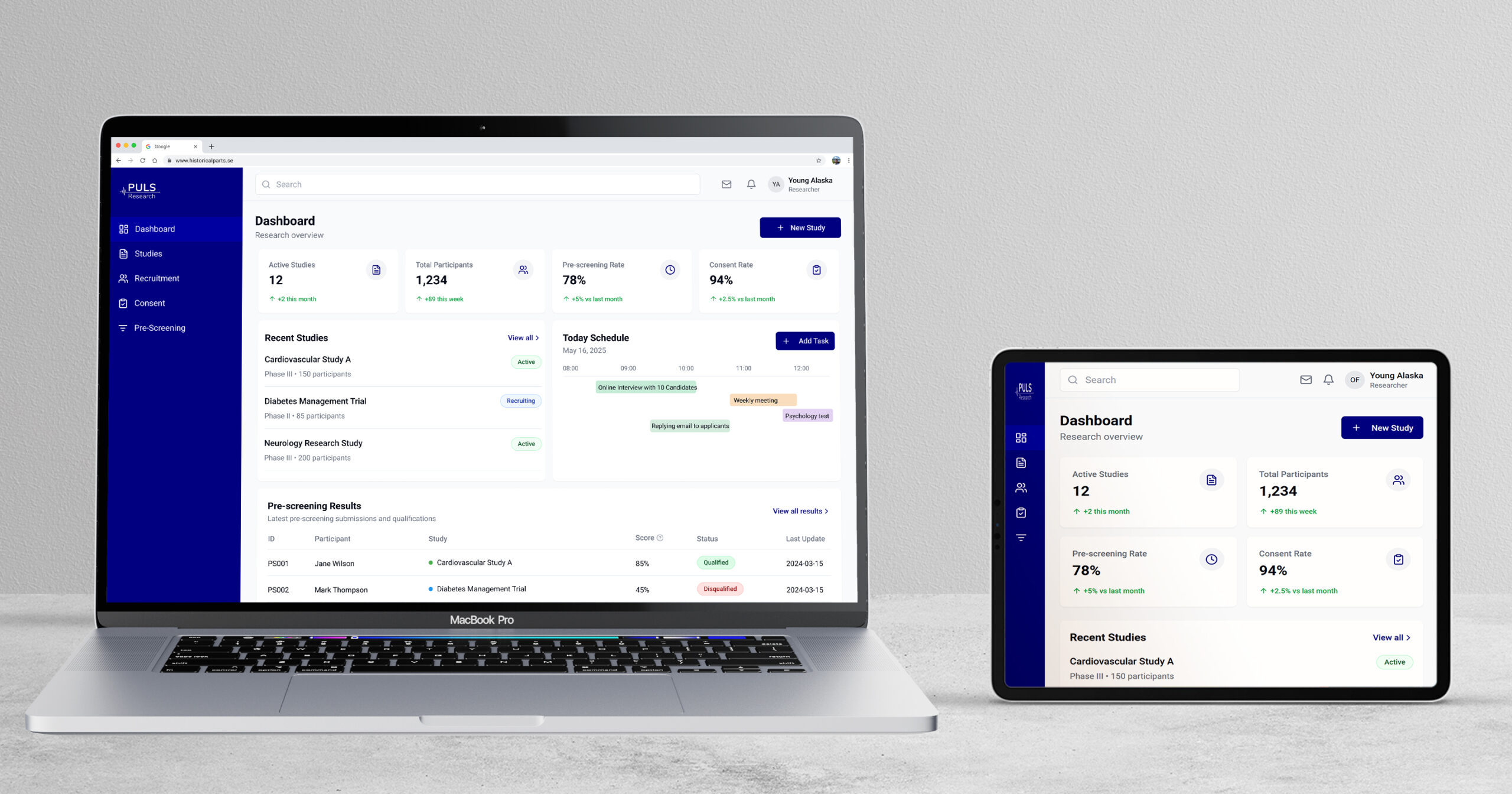
Final design
Replace with: final dashboard design screenshots
Final design — structured, calm, and scannable. Key data stands out through contrast and spacing.

Easier to read, easier to build, easier to maintain.

The redesign created a foundation for scalable, consistent design. Researchers described it as "easier to read and less tiring." Developers reused spacing tokens across other views.

Faster implementation
Documented tokens reduced rework and sped up development.
Consistent hierarchy
Spacing and colour system applied across all views.
Reduced cognitive load
Less visual noise meant researchers could act faster.
Survived a framework change
MUI to Lovable transition kept visual language intact.

A solid structure survives any design system change. Document early — it saves time later. Simplicity builds trust faster than decoration.

What stayed with me most was how much the developer appreciated the documented design system. It made the handoff feel like a collaboration rather than a handover.

Next project
Empowering DJs
A platform for fairer gigs and simpler payments
+46 (0) 737 528 390 farnooshdahesh@gmail.com LinkedIn